Opener clicks but nothing moves
Often caused by misaligned photo-eyes, a failing capacitor, a bad wall control circuit, or an internal gear issue. We confirm the signal path and load at the motor before recommending parts.
Serving Leesburg, Florida & surrounding areas
If your opener clicks, hums, grinds, or stops responding, we'll pinpoint the cause, explain the fix, and get your garage door moving smoothly and safely again.
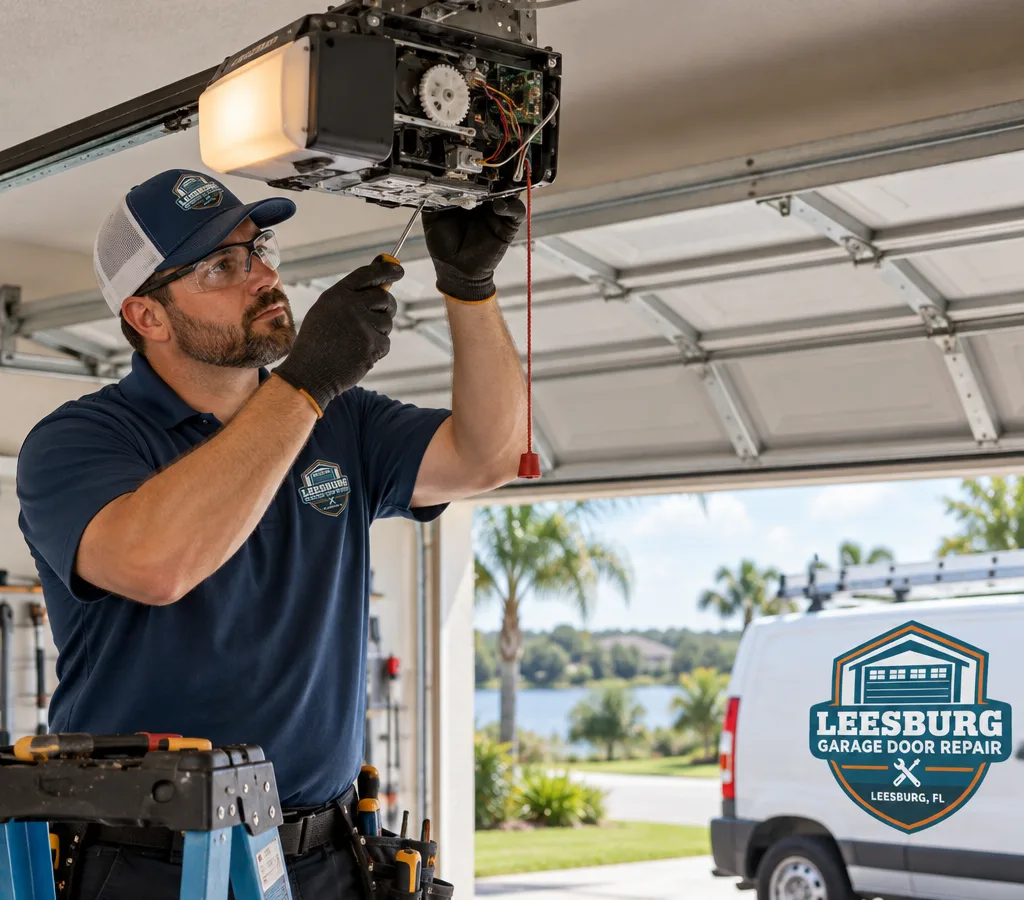
Searching for garage door opener repair leesburg fl usually means one thing: you need reliable access to your garage again without guessing what's wrong. An opener problem can look like a dead remote, a door that reverses for no reason, lights that blink, or a motor that runs while the door barely moves.
Leesburg Garage Door Repair focuses on diagnosing the actual failure point, not swapping parts at random. Some issues are electrical, such as the wall control, safety sensors, or the logic board. Others are mechanical, including a worn drive gear, loose chain or belt tension, stripped sprocket, or binding door hardware. We check both the opener and the door itself, because a door that's heavy or out of balance can cause repeated opener failures.
If you're also comparing options for a larger repair beyond the opener, start with garage door repair in Leesburg. Opener problems and door problems overlap more often than most homeowners expect.
Often caused by misaligned photo-eyes, a failing capacitor, a bad wall control circuit, or an internal gear issue. We confirm the signal path and load at the motor before recommending parts.
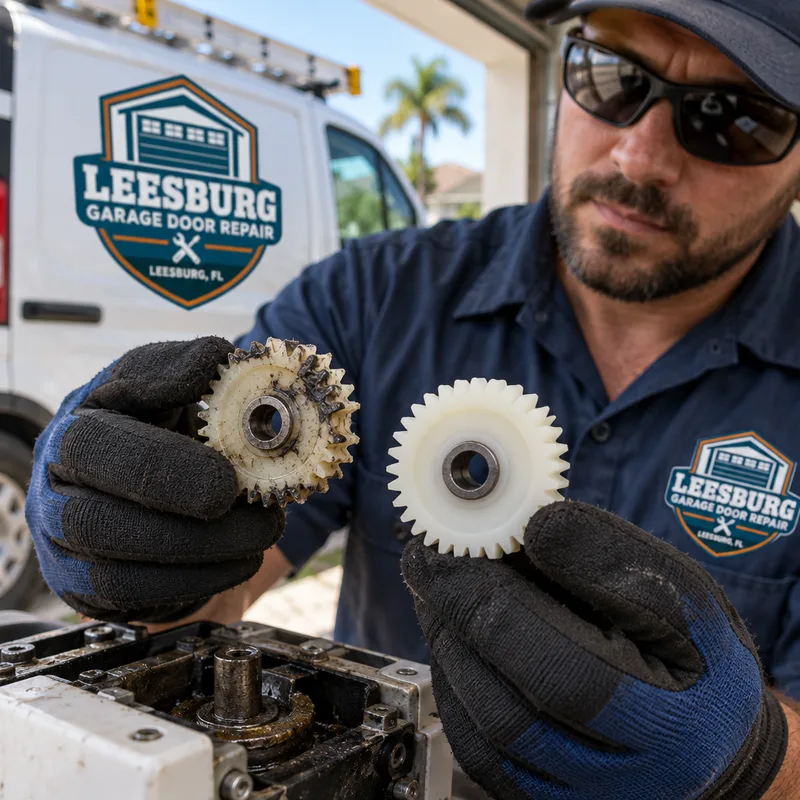
Grinding can point to a worn drive gear or sprocket assembly. Rattling is frequently chain tension, loose mounting, or vibration at the operator bracket. We tighten, align, and replace what's actually worn.
Intermittent response can come from a weak receiver, antenna placement, a failing logic board, or a remote that needs reprogramming. We test range and re-learn codes the right way.
This can be sensor-related, but it can also be force settings reacting to a door that's binding or a track that's out of alignment. We inspect travel, balance, rollers, and obstruction sensing.
Usually points to radio receiver or programming issues, lock or vacation mode, or a logic board fault. We confirm settings and rule out simple causes before any replacement.
A broken internal gear, a disengaged trolley, or a failed carriage assembly can cause this. We verify the rail drive and reconnect or rebuild the drive system as needed.
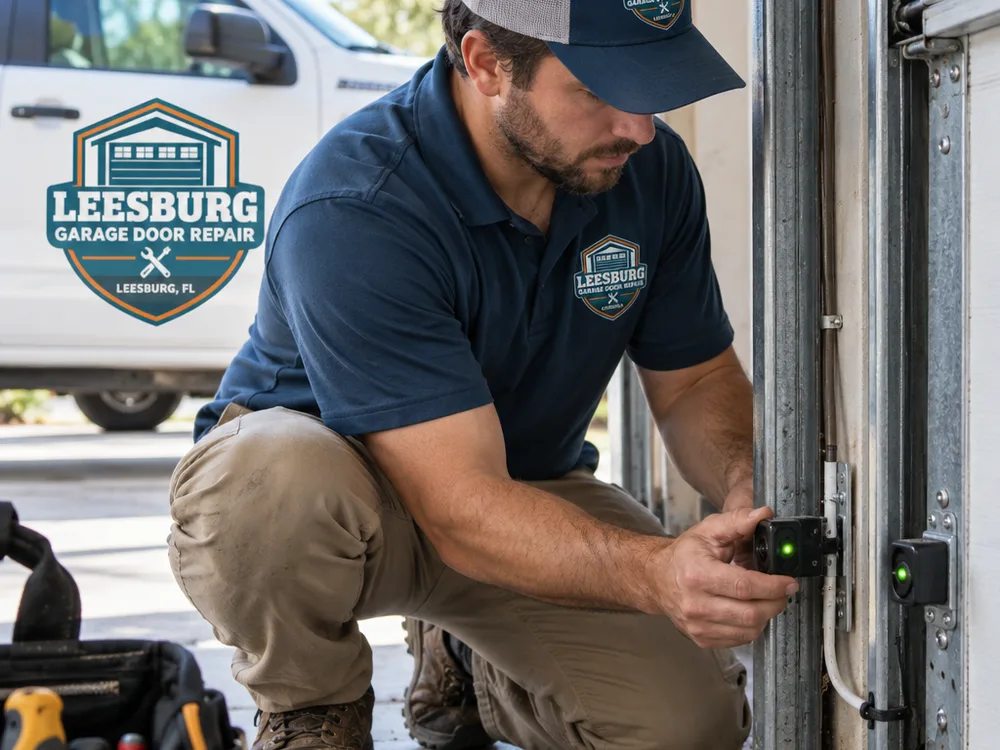
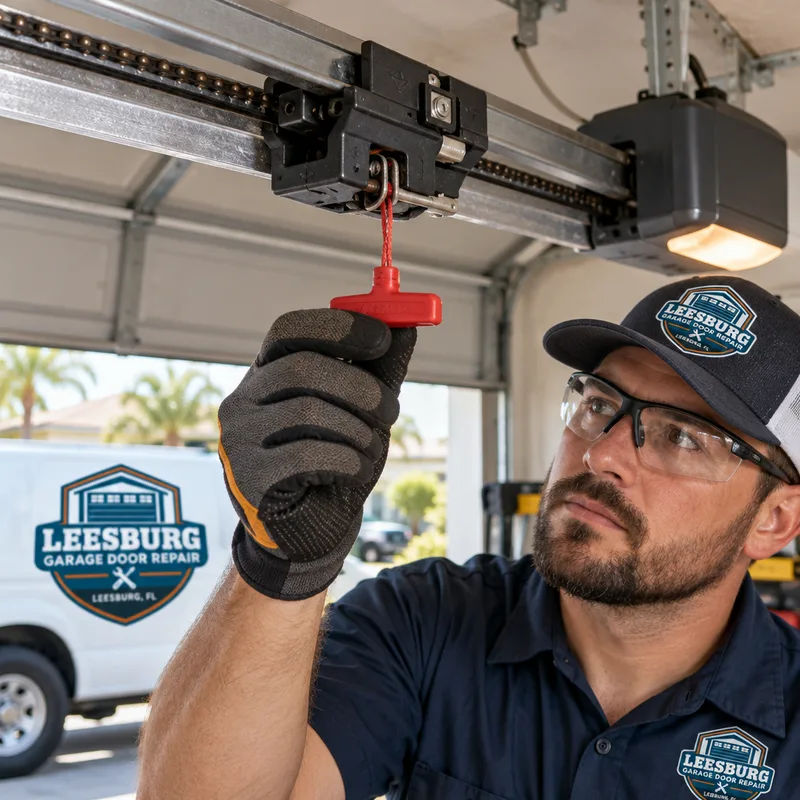
A good opener repair starts with safety and basic function checks. We inspect the photo-eye alignment and wiring, confirm the wall control input, and look for obvious issues like a disengaged trolley or loose operator bracket.
Next we evaluate the garage door itself. If the door is hard to lift by hand, the opener is working against a mechanical problem and will keep acting up. We check door balance, track alignment, roller condition, and the condition of the operator arm connection at the top section.
Then we move to the opener drive and controls: chain or belt tension, rail wear, sprocket and gear wear, limit settings, force settings, and the logic board where applicable. When replacement parts make sense, we'll explain what failed and why, and whether repair or replacement is the better value for your specific opener model.
Because Leesburg weather brings heat and humidity for much of the year, we also look for corrosion at low-voltage terminals and sensor connections, plus signs of moisture intrusion around the opener housing and ceiling mount points.
Step 1 of 4
Tell us what the opener is doing: clicking, humming, reversing, showing no lights, or responding intermittently. Note whether anything changed recently, like a power outage, storm, or new remote.
Step 2 of 4
We test safety sensors, controls, and power, then verify door balance and travel. This helps prevent repeat breakdowns caused by a door that's binding or misaligned.
Step 3 of 4
You'll get a straightforward explanation of the cause, the repair options, and what replacing parts would and wouldn't solve for your door setup.
Step 4 of 4
After the repair, we set limits and force appropriately, re-check reversal and sensor operation, and confirm smooth travel without excessive vibration or strain.
Answers about clicking openers, safety sensors, repair timing, and whether repair or replacement makes sense.
A clicking opener usually means the opener is getting a command but can't complete the movement because of a safety-sensor issue, a control problem, or an internal drive failure. We check photo-eye alignment and wiring first, then confirm the wall control signal, and finally inspect the drive gear, sprocket, and trolley so the repair matches the actual fault.
It can be either, and we diagnose both because the symptoms overlap. If the trolley is disengaged or the internal gear is stripped, the opener can run without lifting the door. If the door is binding or out of balance, the opener may stop or slip under load, so we also test manual lift and track and roller condition.
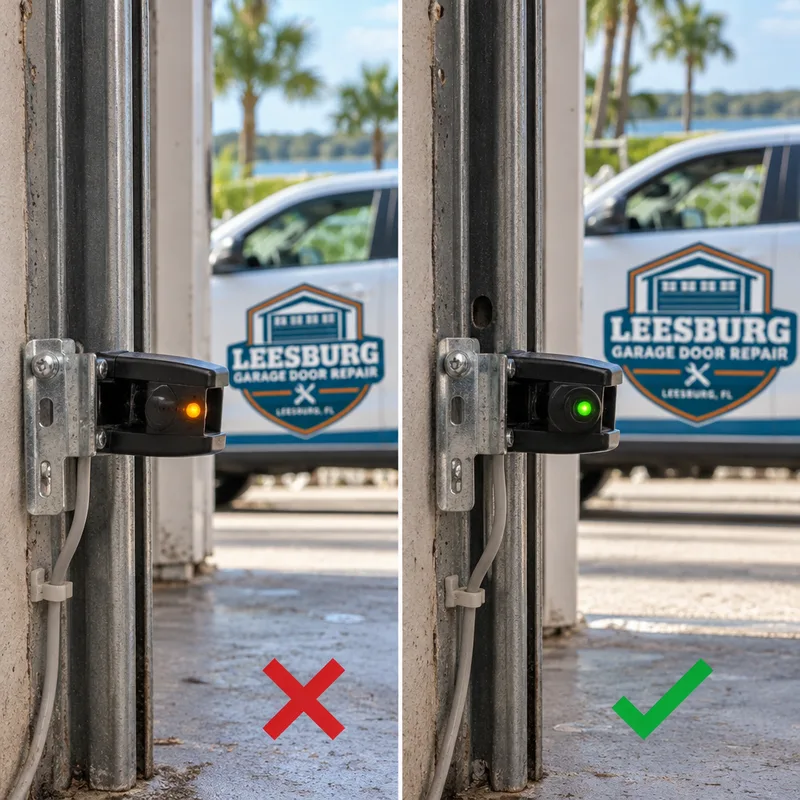
Many sensor issues are repairable through alignment, cleaning, bracket adjustment, or fixing a damaged low-voltage wire. If a sensor has failed electronically or has water damage, replacement is usually the correct fix, followed by a reversal test to confirm the system is responding properly.
Many opener repairs can be completed in a single visit once the cause is confirmed, especially adjustments, sensor wiring repairs, and common wear parts. If a specific board or specialty part is needed for an older unit, timing depends on part availability for that opener model.
Repair makes sense when the opener is otherwise in good condition and the failure is limited to a clear, replaceable part like a gear set, sprocket, capacitor, sensors, or wiring. Replacement can be the better value when the logic board fails on an older unit, the motor shows signs of overheating, or the opener has multiple issues along with a door that needs significant correction.
First, make sure nothing is blocking the photo-eyes and that both sensor lights are on and steady. Next, look for anything crossing the doorway path, including cobwebs or debris near the bottom of the tracks. If you need to secure the garage temporarily, use the wall control to try a close-and-hold. Some openers will close while the button is held, and then a repair visit can correct the underlying issue.
If your opener is acting up, getting it diagnosed early can prevent a burned-out motor, a damaged rail, or a door that gets stuck at the worst time.
CALL NOW: (352) 504-3712Tell Leesburg Garage Door Repair what your opener is doing and when it started. We'll troubleshoot the system, confirm whether the issue is in the opener or the door, and give you a clear repair plan to restore safe daily access.