
Door stabilization and safe reset
We secure the door to prevent sudden movement, then reset rollers into the track in a controlled way rather than forcing the door through a bind.
Serving Leesburg, Florida & surrounding areas
A door that's jumped the track can bind, tilt, and overload the opener. Get the rollers reset, the track realigned, and the door moving smoothly again with a careful, safety-first repair.
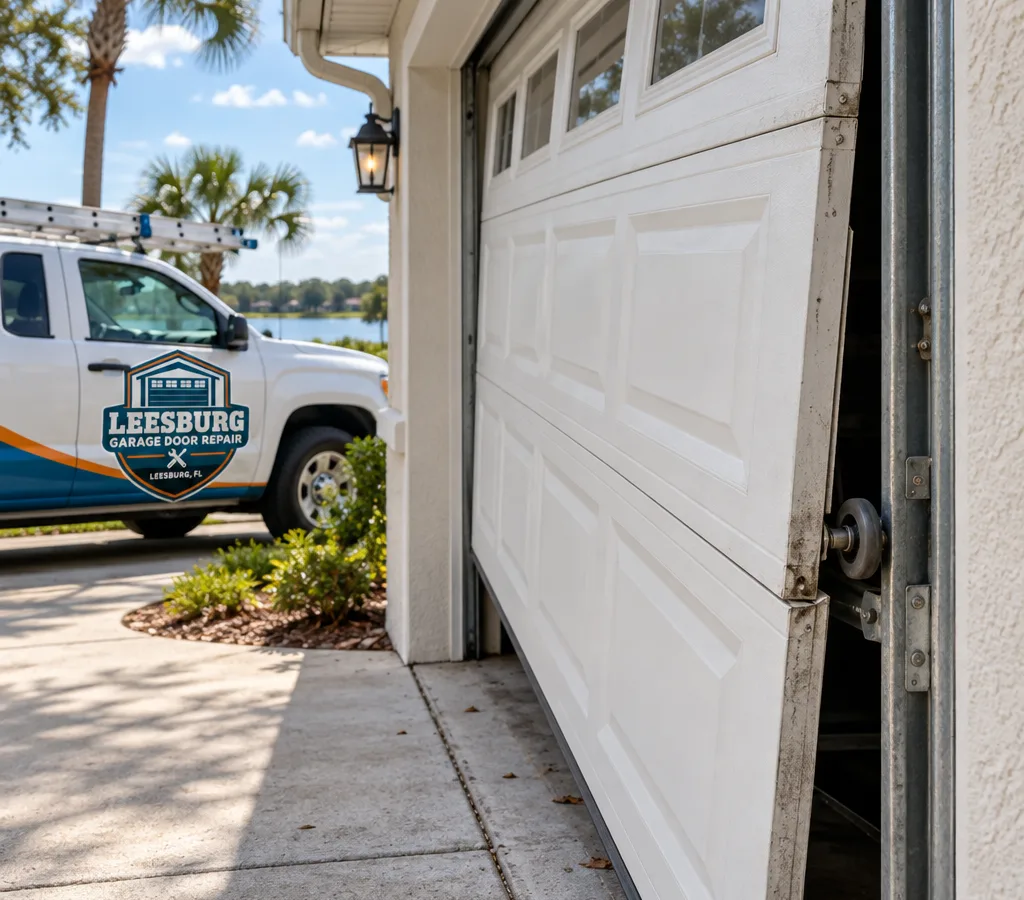
If you're searching for garage door off track repair leesburg fl, you're likely dealing with a door that's stuck, crooked, scraping, or refusing to close. An off-track door is a safety issue because the door can bind and shift suddenly under spring tension.
In many cases, the problem starts small: a roller pops out after an impact, the track loosens at the wall, or the door begins to rack (twist) as it travels. Keep the door in its current position and avoid forcing it with the wall button or remote. Pushing an off-track door can bend the vertical track, damage hinges, pull cables off the drum, or burn out an opener.
Leesburg Garage Door Repair handles off-track garage door problems by getting the door stabilized first, then correcting the cause so it tracks straight and runs smoothly.
Most off-track calls involve one of these situations:
A proper garage door off track repair is more than pushing a roller back in. The door has to be square in the opening, tracks must be parallel and plumb, and the door must travel without binding. When we realign, we check the roller stems, hinge barrels, track spacing, and fasteners so the problem doesn't repeat the next time the door cycles.
If you're also dealing with broader issues like a door that won't open reliably, garage door repair in Leesburg can start with a safety inspection and then focus the work where the failure actually is.
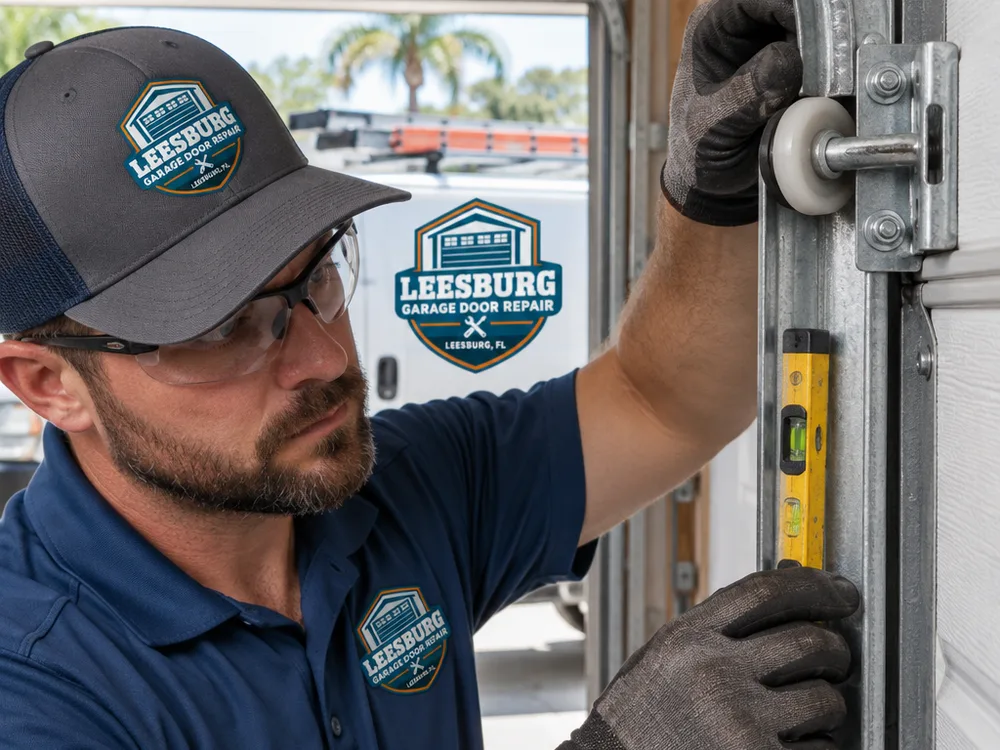
We secure the door to prevent sudden movement, then reset rollers into the track in a controlled way rather than forcing the door through a bind.
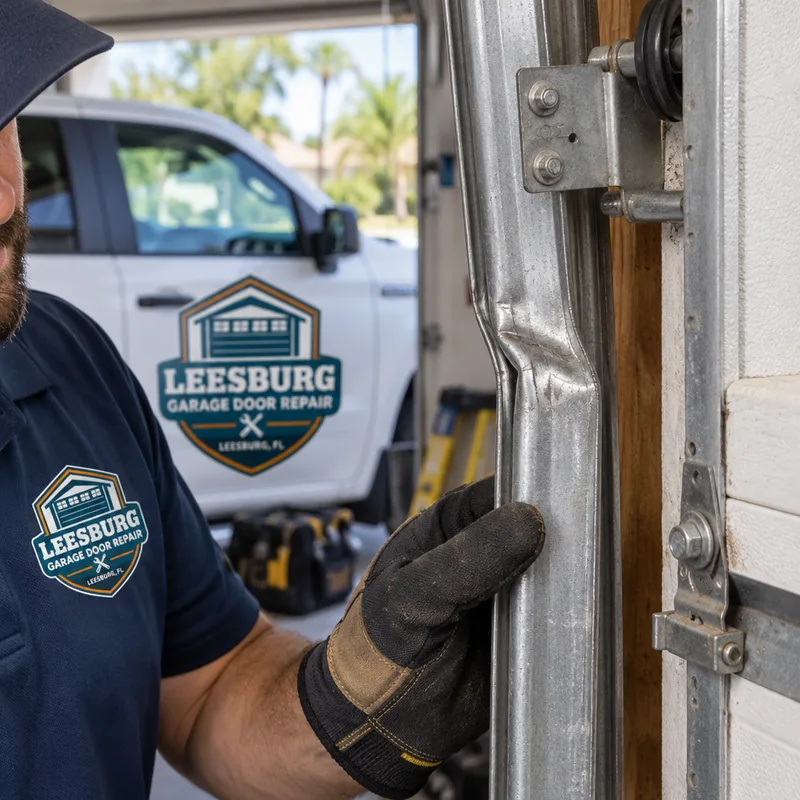
We straighten and align vertical and horizontal track so rollers run centered, then tighten and correct bracket placement where movement started.
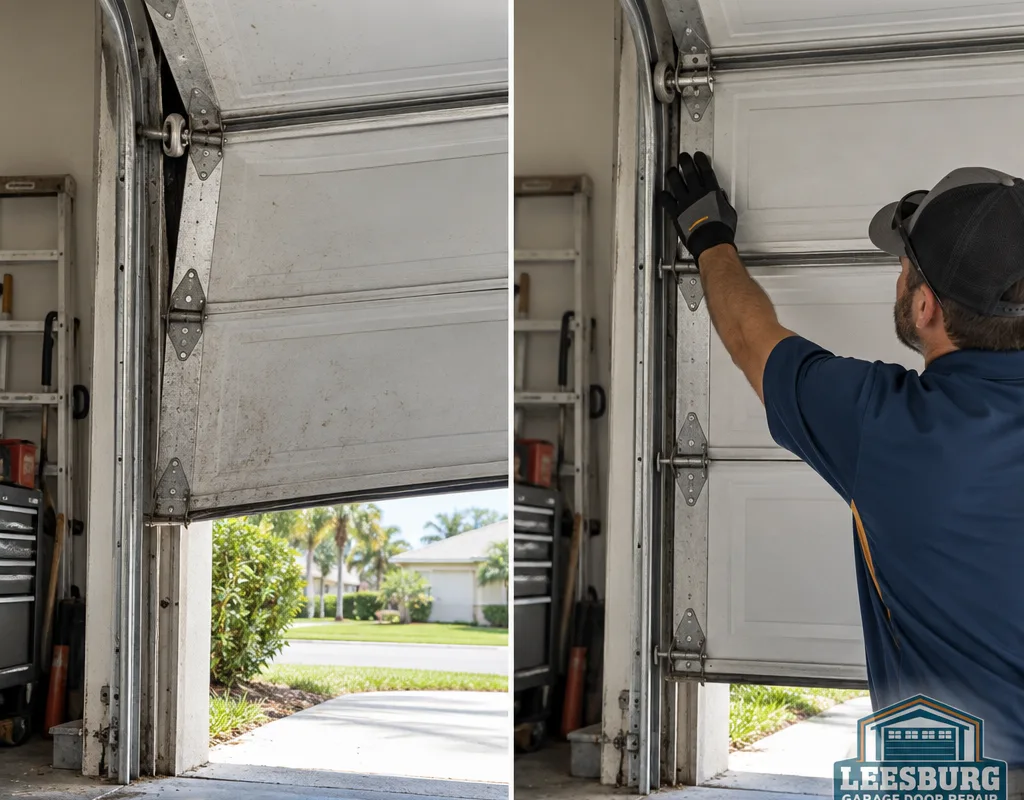
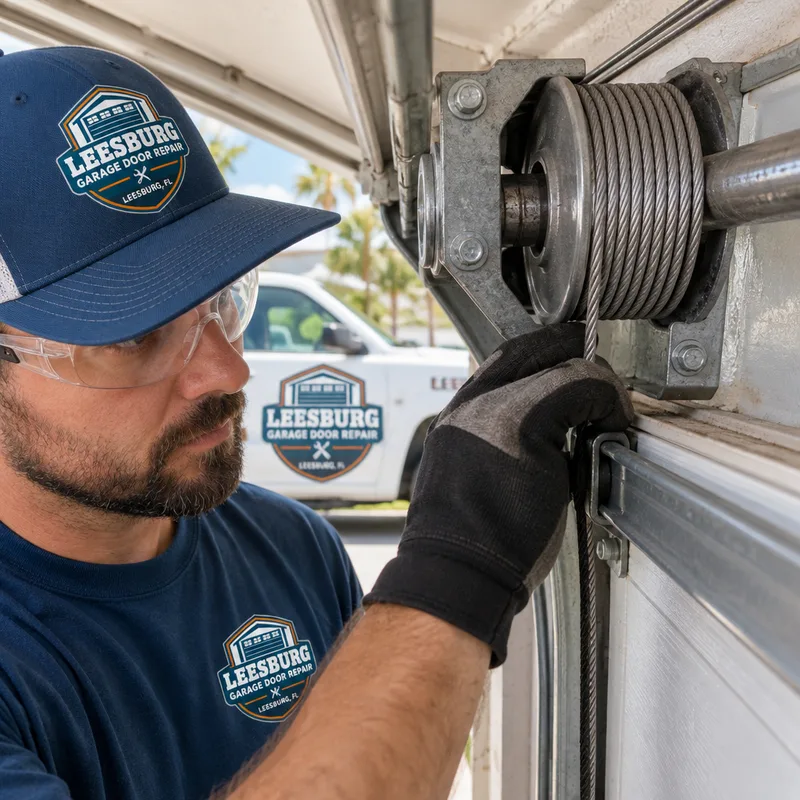
If the door is tilted, we look for slack, fraying, or a cable that's jumped the drum, and correct alignment so both sides lift evenly.
We inspect rollers for flat spots and wobble, and hinges for cracks or egged-out holes that can steer the door off its path.
After the door moves correctly by hand, we confirm the opener isn't being forced to drag a binding door, and we watch a full cycle for smooth travel.
Step 1 of 5
We start by checking door position, roller placement, and cable tension. If anything is unstable, we secure it before attempting any reset or movement.
Step 2 of 5
We bring the door back into a level, square position in the opening, then guide rollers back into the correct track channel without bending hardware.
Step 3 of 5
We correct track spacing, plumb, and parallel alignment so the rollers stay captured through the full travel path, including the curve into the horizontal track.
Step 4 of 5
If the track was hit, brackets loosened, a hinge is failing, or a cable slipped, we correct that cause so the door doesn't walk out of the track again.
Step 5 of 5
We run the door manually to confirm balanced, smooth movement, then run it with the opener and watch for rubbing, clicking, or drift that signals misalignment.
Answers about off-track safety, cables, track replacement, repair timing, and what to do before service.
It's risky to do without the right tools and control of the door because the door's weight and spring tension can shift suddenly. If a roller popped out because the track is bent, a bracket is loose, or a cable is slack, forcing the door can make the damage worse. The safer approach is to keep the door still and have the track, rollers, and cables checked before the door is moved.
The most common causes are impact (even a light bump from a vehicle), loose track mounting hardware, worn rollers, or a cable problem that lets one side drop. In Central Florida, garages also see humidity and corrosion that can contribute to hardware loosening over time, which is why bracket tightness and track alignment matter after the reset.
No. If the door is off track, the opener can pull the door crooked, strip gears, bend the top section, or worsen a cable issue. A correct repair includes making sure the door moves smoothly by hand first, then confirming it runs straight under power.
Many off-track repairs take about 1 to 2 hours when the issue is roller reset and track alignment. If the track is damaged, cables need to be reset, or multiple rollers and hinges are worn, the visit can take longer because the door should be tested through full travel after corrections are made.
Not always. If the track is only slightly out of alignment or the brackets have shifted, realignment and tightening can be enough. Track replacement is more likely when there is a crease, severe bend, or a spread that keeps pulling rollers out even after alignment.
It can be either, and they often occur together. A slipped or slack cable can drop one side and pull rollers out of the track, and an off-track roller can also create a tilt. The fix is to stabilize the door, confirm both cables are seated correctly on the drums, then align track and rollers so both sides lift evenly.
Tell Leesburg Garage Door Repair what the door is doing (crooked, stuck, scraping, or a roller out) and we'll confirm the next steps, including what needs to be realigned or replaced to restore smooth, safe operation.